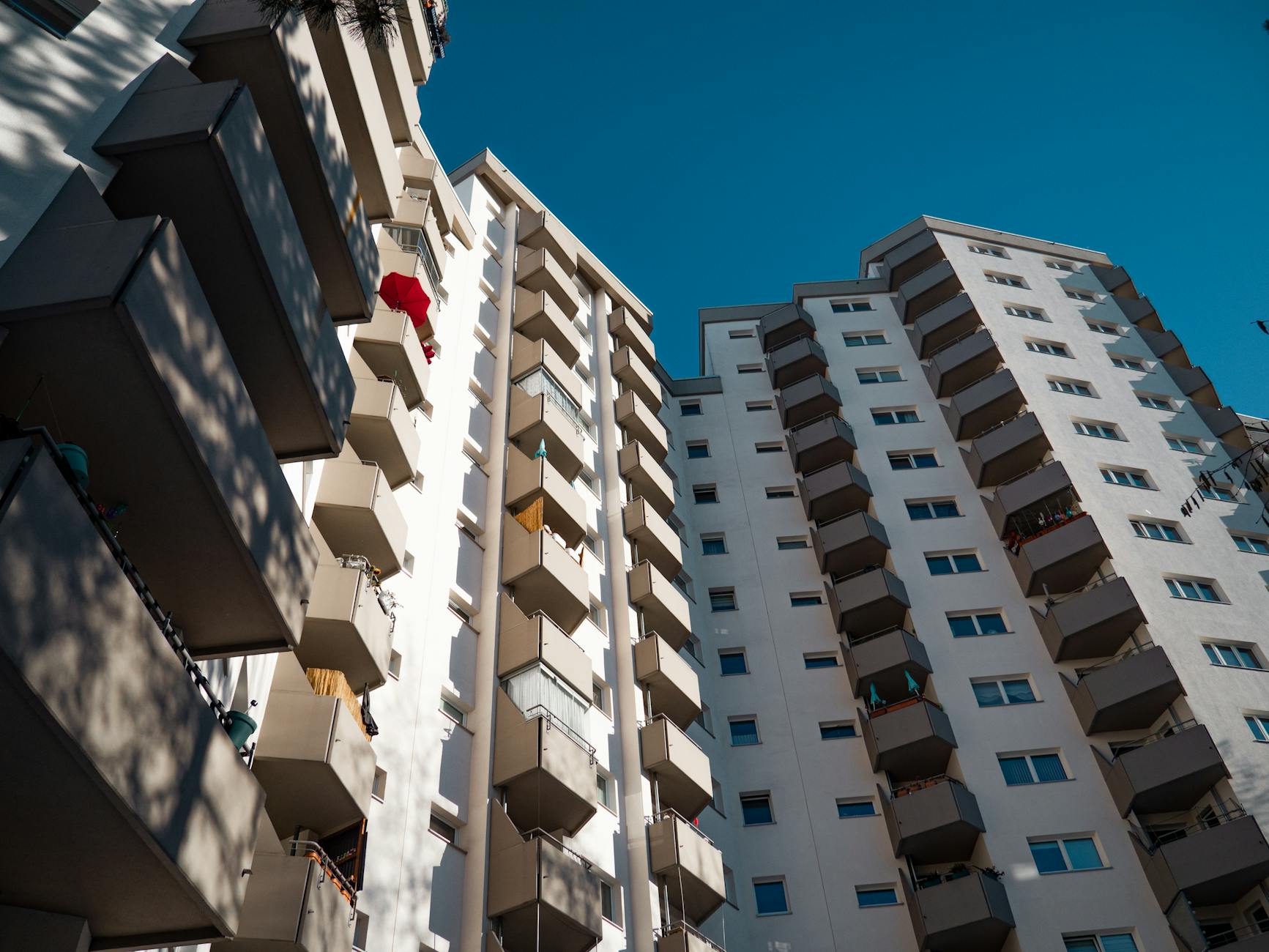

The case for multifamily over single-family has always been simple: multiple income streams from one transaction, one roof, one set of insurance bills, one property tax assessment. Vacancy in one unit does not eliminate all your income. A bad tenant in a fourplex is a problem. A bad tenant in a single-family rental is a crisis.
Small multifamily - duplexes, triplexes, and fourplexes - sits at the intersection of residential financing and investment strategy. You can finance it like a home, operate it like a business, and eventually trade it like a commercial asset.
The residential versus commercial dividing line
Properties with one to four units are classified as residential for financing purposes. Five units and above are commercial. This matters enormously.
Residential financing means access to FHA loans (3.5% down for owner-occupied), conventional loans at standard rates, and DSCR financing that follows residential underwriting. Commercial financing requires 20-30% down, is priced on the property's cap rate rather than comparable sales, and involves more complex underwriting.
For most investors starting out, the 2-4 unit residential path offers the best combination of leverage, financing cost, and entry price. A fourplex in a secondary market might cost $400,000-600,000 - achievable with a conventional investment loan at 25% down ($100,000-150,000 into the deal).
Value-add multifamily
The highest-returning multifamily strategies are value-add: buying properties with below-market rents, deferred maintenance, or operational inefficiencies and systematically fixing them.
A fourplex generating $3,200/month at $800 per unit when market rent is $1,050 has a clear upside path. Renovate units as they turn over, push rents to market, and the property's income - and therefore its value - increases significantly.
Multifamily value in commercial properties (5+) is determined by cap rate and NOI: value equals NOI divided by cap rate. If you increase NOI from $48,000 to $64,000 and the market cap rate is 7%, you have added $228,000 in value ($64,000 / 0.07 = $914,000 versus $686,000). CoStar's multifamily data tracks cap rate trends by market.
In small residential multifamily, comparable sales drive value more than income, but the same principle applies over time as the property's income history builds.
What to analyze before you buy
Rent roll versus market rents. Ask for the current rent roll on day one. Compare every unit to current market rents for the area. The gap between in-place and market rents is your upside opportunity - or if rents are already at market, your income ceiling.
Expense history. Two years of actual operating expenses tells you more than pro formas. Focus on maintenance costs, utility costs (especially in properties where the owner pays water), and property management expenses if applicable.
Unit condition. Walk every unit. Properties presented with only common area access before contract often have significant deferred maintenance in individual units that is not visible during a surface inspection.
Neighborhood vacancy rate. FRED data and local property management companies can give you realistic vacancy expectations for the specific submarket. A property in an area with 12% rental vacancy needs a different underwriting assumption than one in a market with 3%.
Financing small multifamily
Conventional investment property loans require 25% down for 2-4 unit properties. Rates run 50-75 basis points above primary residence rates for the same credit profile.
Owner-occupied buyers can use 3.5% FHA financing for up to four units, which dramatically reduces the entry capital required. This is the house hacking angle applied to multifamily.
DSCR loans work well for stabilized multifamily where the rental income clearly covers debt service. Most DSCR lenders have products for 2-4 unit residential properties, with some extending to 5-8 unit small commercial.
Management considerations
Self-managing a duplex in the same city where you live is manageable. Self-managing a 20-unit building remotely is a full-time job. Most investors find the inflection point for professional management is somewhere in the 6-12 unit range, when the time cost of self-management exceeds the 8-10% management fee.
For small multifamily, local property management companies charge 8-12% of collected rent plus leasing fees (typically half to one full month's rent per placement). Build these costs into your underwriting whether you plan to self-manage or not - your circumstances will change.
This article is for informational purposes only and does not constitute financial, legal, or tax advice. Consult a qualified professional before making investment decisions.